

- TOP
- Blog
- Nippon Biofuel Selected for METI Large-Scale Demonstration Project to Build a Japan-Led Marine Biofuel Supply Chain — JPY 7 Billion Africa-Based Green Corridor Initiative —
BLOG-ENBlog
- Press release2026.04.19
April 19, 2026
Nippon Biofuel Co., Ltd. (“NBF”) announces that it has been selected for a large-scale demonstration project under the “FY2024 Supplementary Global South Future-Oriented Co-Creation Program (Large-Scale Demonstration, Non-ASEAN Countries, Second Call)” implemented by Japan’s Ministry of Economy, Trade and Industry (METI).
The project, with a total value of approximately JPY 7 billion (including JPY 4 billion in subsidies), aims to establish a new energy supply model integrating biofuel production and carbon reduction. It will be implemented in Nampula Province, Mozambique, and the Bono East Region of Ghana, in collaboration with major Japanese maritime companies and certification bodies, contributing to Japan’s energy security and Green Transformation (GX).
■ Project Overview
This project aims to establish next-generation biofuel supply infrastructure for international shipping in collaboration with the following partners:
• Mitsui O.S.K. Lines, Ltd.
• Kuribayashi Steamship Co., Ltd.
• Nippon Kaiji Kyokai (ClassNK)
• Fujii Oil Co., Ltd.
• Tottori University
As part of our company’s sole application for this large-scale demonstration project, the external partner companies mentioned here have expressed their support for the project’s purpose and vision through non-binding letters of intent for cooperation, with our company serving as the lead organization.
These expressions of support do not represent confirmed participation at this stage. The formal project structure will be established and advanced following the project’s selection.
Key initiatives include:
• Establishment of a Jatropha cultivation model
• Production of Jatropha-based biofuel
• Development of bunkering systems in Mozambique, Ghana, Singapore, and Japan
• Fuel supply demonstration for ocean-going vessels and domestic vessels
• Carbon removal through afforestation and biochar production
• Development of rural income and community models
The project will be promoted as:
“Green Corridor Initiative – Integrated Biofuel & Carbon Removal”
■ Strategic Importance for Energy Security
Amid rising geopolitical uncertainties, ensuring a stable energy supply has become a global priority. Japan remains highly dependent on energy imports from specific regions, making diversification and decentralization essential.
This project contributes to establishing a sustainable energy supply chain from Africa, reducing dependency risks while ensuring long-term supply stability.
■ Supply Target
The project aims to achieve:
• Annual supply capacity of 400,000 tons of biofuel by 2032
■ Key Differentiators
Compared to conventional biofuel initiatives, this project features:
• A fully integrated model covering production, processing, logistics, supply, utilization, and certification
• A supply design optimized for maritime use, aligned with global decarbonization regulations including the International Maritime Organization(IMO) and FuelEU Maritime
• Integration with regional infrastructure such as the Nacala Corridor and Volta Lake transport
• A farmer-participatory value distribution model
This enables commercialization of a next-generation energy supply system.
■ Role of Government Support
With a total investment of approximately JPY 7 billion, the project faces challenges such as:
• High upfront capital requirements
• Long maturation periods for tree-based feedstock
• Infrastructure development needs
The JPY 4 billion government subsidy plays a catalytic role in reducing risks, mobilizing private investment, and accelerating commercialization.
■ Social and Strategic Impact
This project contributes to:
• Strengthening energy security through diversified supply sources
• Decarbonizing the maritime sector
• Creating sustainable agriculture and jobs in Africa
• Expanding carbon credit markets
It aims to establish a new industrial model integrating energy, agriculture, and greenhouse gas reduction, benefiting both Japan and partner countries.
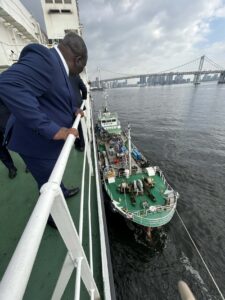
[Bunkering was conducted by a Fujii Oil Co., Ltd. bunkering vessel, supplying marine fuel blended with 10% Jatropha biofuel to a RORO vessel operated by Kuribayashi Steamship Co., Ltd.]
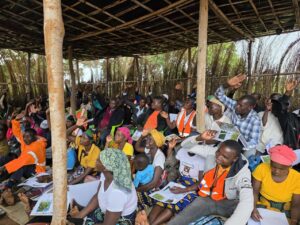
[Training for farmer leaders on the Japanese-style multipurpose agricultural cooperative model and agroforestry using Jatropha (FAO project)]
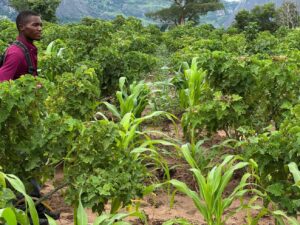
[Jatropha intercropping with maize and cowpea]
■ CEO Comment
Makoto Goda, CEO, Nippon Biofuel Co., Ltd.
“This project represents a new integrated energy model that integrates energy security, decarbonization, and rural development. Jatropha, as a perennial crop, enables smallholder farmers to build long-term productive assets. Through this initiative, we aim to provide a sustainable and stable alternative for future energy supply.”
■ Company Overview
Nippon Biofuel Co., Ltd. develops biofuel and carbon removal solutions utilizing Jatropha.
The company possesses proprietary genetic resources and breeding technologies, including high-yield varieties with up to 50 times higher productivity compared to wild types.
■ Contact
Nippon Biofuel Co., Ltd.
Makoto Goda
Email: makoto_goda@nbf-web.com
Website: https://nbf-web.com